

Fundamentals of Western Blotting A Guide to Protein Analysis

Western blotting, also known as immunoblotting, is a foundational technique in molecular biology used to detect and analyze specific proteins in complex biological samples. By combining protein separation, transfer, and antibody-based detection, Western blotting allows researchers to study protein expression, modifications, and interactions. Understanding the fundamentals of Western blotting is essential for designing accurate experiments and interpreting reliable results.
1. Overview of Western Blotting
The core principle of Western blotting involves two major steps: protein separation by size and specific detection using antibodies. Proteins are first separated using gel electrophoresis, then transferred onto a solid membrane, which provides a stable platform for antibody binding. This technique enables detection of proteins even at low concentrations and distinguishes them from other proteins in the mixture.
2. Key Components
Western blotting relies on several essential components:
-
Protein Samples: Extracted from cells or tissues, usually treated with detergents and reducing agents to maintain solubility and denature the proteins.
-
Polyacrylamide Gel: Separates proteins according to molecular weight. The gel concentration is adjusted depending on the protein size.
-
Transfer Membrane: Typically nitrocellulose or PVDF, membranes immobilize proteins after electrophoresis for antibody probing.
-
Antibodies: Primary antibodies specifically recognize the target protein, while secondary antibodies conjugated with detection molecules (enzymes or fluorophores) amplify the signal.
-
Detection Reagents: Chemiluminescent, fluorescent, or colorimetric substrates reveal the presence of proteins on the membrane.
3. Fundamental Steps
The Western blotting process can be divided into several fundamental steps:
-
Protein Extraction: Cells or tissues are lysed to release proteins, which are then quantified to ensure equal loading in the gel.
-
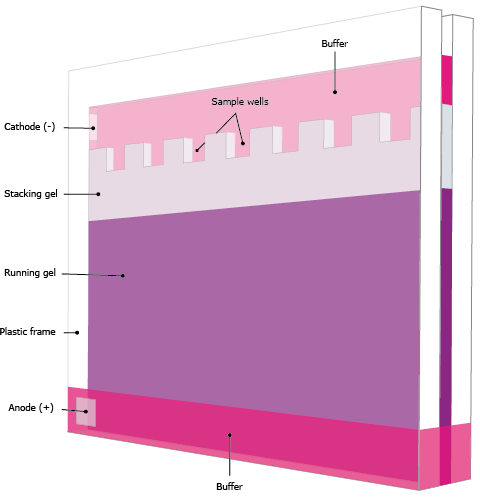
SDS-PAGE (Protein Separation): Proteins are denatured and coated with SDS, giving them uniform negative charges. An electric current separates proteins based on size.
-
Protein Transfer: western blot technique overview migrate from the gel onto a membrane using a protein transfer system, which may be wet, semi-dry, or capillary. The membrane captures the proteins in their separated positions.
-
Blocking: Membranes are incubated with a blocking solution (e.g., BSA or non-fat milk) to prevent non-specific antibody binding.
-
Antibody Incubation: Primary antibodies bind to the specific target protein, and secondary antibodies conjugated with enzymes or fluorophores detect the bound primary antibody.
-
Detection: Signal development reveals protein bands, which can then be analyzed visually or quantitatively using imaging systems and densitometry software.
4. Fundamental Concepts
Several theoretical principles are critical to Western blotting:
-
Specificity: Antibody-antigen interactions ensure that only the target protein is detected. Careful antibody selection minimizes cross-reactivity.
-
Sensitivity: Detection methods amplify signals to reveal even low-abundance proteins. Chemiluminescent and fluorescent methods are particularly sensitive.
-
Quantification: Band intensity reflects protein abundance. Using housekeeping proteins as internal controls allows normalization and relative quantification.
-
Reproducibility: Standardized procedures, including consistent sample loading, transfer, and imaging, are essential for reliable results.
5. Applications
Western blotting is widely used in research and clinical laboratories for:
-
Measuring protein expression levels under different conditions
-
Detecting post-translational modifications such as phosphorylation
-
Validating recombinant protein production
-
Identifying disease biomarkers and studying protein-protein interactions
Conclusion
The fundamentals of Western blotting combine protein chemistry, electrophoresis, and immunology to provide a powerful method for protein analysis. By understanding its components, workflow, and theoretical principles, researchers can design accurate experiments and generate reproducible, meaningful results. Mastery of these fundamentals is essential for anyone studying protein biology or conducting molecular research.